Customer Purchase Process: 4 Key Steps to Decision
Marketing Digital ·
Learn the stages of the Purchase Process with examples and how to balance content production. Check it out here! ✅
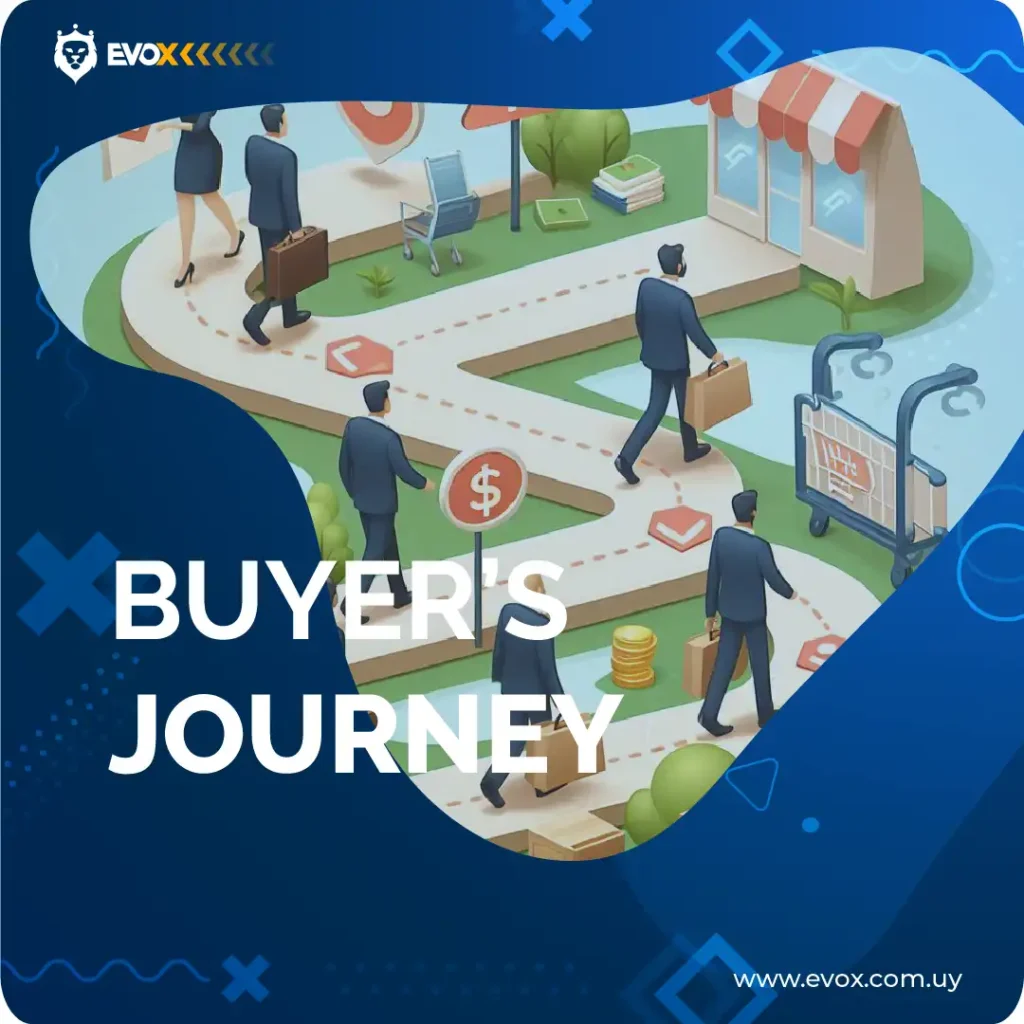
Consumer behavior has changed!
Nowadays, consumers go through an entire process before purchasing a product or service, and not everyone is ready to take this action the first time they come into contact with a company.
For all this to flow smoothly and reach the final goal, it's essential that you understand the purchase process, the topic we'll cover in this content.
Let's get started 💪
What is the purchase process?
The purchase process (or buyer's journey) is the set of stages your target audience goes through before becoming a customer.
It is divided into 4 stages: learning and discovery, problem recognition, solution consideration, and purchase decision.
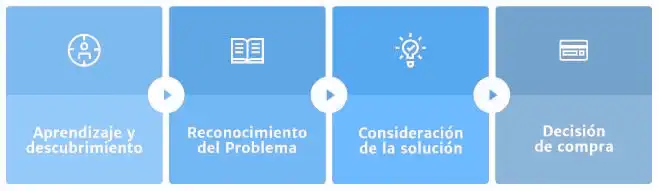
Some sources present it in 3 stages: awareness, consideration, and decision.
Stage 1: Learning and Discovery
At the beginning of the process, the consumer does not know (or does not know well) that they have a problem or a need.
They are still awakening interest in a particular topic, and your company's goal is to capture their attention so that later they realize they have a problem or business opportunity.
Example of this stage of the purchase process
Joana owns a small grocery store. Since her store needs to restock frequently, she searches online for help organizing her work.
If your company offers stock control software, at that moment you could offer Joana blog posts with topics like "Tips for organizing your company's stock".
Since this is a topic that helps her in her daily life, she finds it through internet searches or shares on social media and becomes interested in the content.
Stage 2: Problem Recognition
Here the consumer has already delved a bit deeper into the topic and perceives that they have a problem or opportunity.
The goal at this stage is to "generate" that need in them, or rather: reveal a problem they have but didn't know about yet. From there, they begin to search and study the problem further, then look for solutions.
Example of this stage of the purchase process
Joana begins to notice that she has difficulties controlling stock in her store and needs to find a solution to make her life easier. So she starts looking for information on how to improve her work.
A post your company could create would be "How to calculate ideal stock for your company." You could also do a webinar on the topic or even a spreadsheet template to help her with the task.
Stage 3: Solution Consideration
After researching more, the buyer has already mapped out some possible solutions and begins to evaluate them.
At this stage, it's necessary for them to identify your product or service as a good solution.
It's important to create a sense of urgency so that the buyer advances in the process and doesn't put the problem off (or have time to look for other solutions).
Example of this stage of the purchase process
Joana realizes that calculating stock can be complex and time-consuming, and she has other activities to work on. It's time to show her the solutions available on the market that can help her.
At this point, content like "Stock control software for small businesses" would be useful. And it's time to introduce your tool to her.
Stage 4: Purchase Decision
At the end of the process, the consumer analyzes the options and makes their decision.
It's time to purchase. It's time to show your company's differentiators compared to the competition and convince them that your product is the right decision.
Example of this stage of the purchase process
Joana is interested in your software and does some more research. A blog post comparing you to the competition can help her understand that your solution is the best option. She can also take a free trial for a certain time to test the tool.
At the end of that period, she liked the experience and decided to buy.
Guide to Content Production in the Purchase Process
Understanding the 4 previous stages is of utmost importance to determine what content should be created. Only by knowing these steps can you guide your visitor or lead to the end of the process.
It's crucial to carry out this analysis before starting content production. If the process is already underway, it's essential to reinforce the importance of this analysis to guide what should be done from here on.
Taking Joana's example, if we know her needs at each stage, we will know exactly what to offer to facilitate her progression through the process.
Mapping out what needs to be done at each stage helps balance content production, especially if it's done in-house with limited resources.
In the end, it doesn't make sense to have 10 posts, 2 eBooks, and other materials for those in the initial stage of the process if there is no clear path to guide the audience.
That control over the materials for each stage is also fundamental for building marketing automation flows. These aim to generate automatic and personalized interactions with leads, guiding them to purchase.
Besides thinking about the content itself, it's crucial to consider the format to deliver your message. Some possibilities are:
✅ Learning and Discovery: broader content that captures the audience's attention, such as posts, eBooks, or webinars with introductory topics on a subject.
Examples of topics that can be worked on at this stage:
- Why pay attention to this topic?
- The 7 benefits of __ for companies in "that segment"
- What is the role of __ in your company?
✅ Problem Recognition: at this stage, the same format can go deeper and focus on the problem or opportunity, so that the buyer identifies it.
Examples of topics that can be worked on at this stage:
- I want to know more about this problem. How to solve it?
- How to do _ in 7 steps
- What you didn't know about __
- Checklist: how to implement a _ campaign
✅ Solution Consideration: here we show content focused on solutions, presenting options for the client, including your product or service. An example could be a case study of a client who used your solution to solve their problem.
Examples of topics that can be worked on at this stage:
- Case study: how company X implemented _
- "X" precautions your company should take when choosing an ideal tool for _
- Industry analysis: how the market is adopting __
✅ Purchase Decision: to convince the client to choose your company, offers like a free trial or comparative materials with other tools are effective options.
Examples of topics that can be worked on at this stage:
- Why is our company your best option?
- Comparison: differences between company A and company B
- 15 exclusive benefits that only our customers enjoy
- Demo: how the _ tool works
What are the 5 stages of the consumer purchase process?
Do you agree with us that it makes no sense to do all the work of mapping the process, producing content, leading the lead to the sale, and then leaving them "loose" and losing them? Although it is not part of the purchase process, we could add an additional stage: retention and new purchases (or upsell).
Recent data indicates that retaining a customer is 6 to 7 times cheaper than acquiring a new one. Therefore, businesses based on a one-time purchase or monthly subscription services can benefit by identifying the buyer's needs after becoming a customer and offering them relevant content.
Let's consider two situations:
- If a customer buys a dress model X from an e-commerce site, why not direct communications based on their preferences (or what they placed in the cart, characteristics of the purchased product, ads they clicked on, etc.) and stimulate a new purchase?
- In the case of a subscriber to an online video platform, why not offer a webinar with usage tips, emails with product updates, or examples of what other customers are doing with the tool?
Flowchart of the purchase process:
A flowchart of the purchase process can vary by company or industry, but we can guide ourselves with this summary:
- Purchase initiation: the first step towards the purchase action.
- Purchase needs: identification of the need to acquire a product or service.
- Research: search for information about the available product/service, price and feature comparison.
- Purchase decision: the consumer makes the final decision to purchase the product.
- Purchase data: request for customer information and payment details.
- Purchase confirmation: review and validation of the purchase before finalizing the process.
- Customer satisfaction: evaluation of the user experience to gather relevant information and improve the purchase flow.
Once this journey is completed, it is crucial to ensure an excellent experience for both the consumer and the responsible team.
In practice: how to identify purchase process content:
To facilitate execution, we'll share our methodology for identifying content that can help our potential customers at each stage.
First, we identify our personas based on our current customers. From there, we design profiles, identify common needs, and create hypotheses about what content can help at each stage of the purchase process.
To validate our hypotheses, we conduct interviews with current customers (and leads in process) to collect relevant information and confirm our assumptions.
It's useful to segment questions by each stage of the process. For example, at the beginning, we need to know through which channels they get information (Facebook, blogs they follow, etc.) to decide where to promote our content, including guest posts.
Questions like "When did you start researching topic X and what content did you find useful?" are fundamental for the early stages. On the other hand, questions like "What factors influenced your decision to choose our product?" help us identify relevant content for closing the deal.
Once the interviews are completed, we organize the information and categorize the content by stage of the purchase process.
With these inputs, we can determine future content and offer what our potential customers need to conclude the process and choose our solution.
Are you ready with this topic? If so, we can mark ✅ this process on your knowledge list.
See you soon!